How Your CIBIL Score Impacts Loan Approval: The Complete First-Time Borrower's Guide
Your CIBIL score is a three-digit number that banks treat like a crystal ball. It predicts whether you'll pay back money on time. Score above 750? Lenders practically roll out red carpets. Below 600? They'll likely show you the door.
For first-time borrowers, this creates a puzzle. You need credit to build credit, but you need credit history to get credit. Understanding how your CIBIL score impacts loan approval helps you break this cycle and secure your first loan on favorable terms.
What Banks See When They Check Your CIBIL Score
When you apply for any loan, the lender's first move is pulling your CIBIL report. They're not just looking at the score itself. They're analyzing your entire credit behavior pattern.
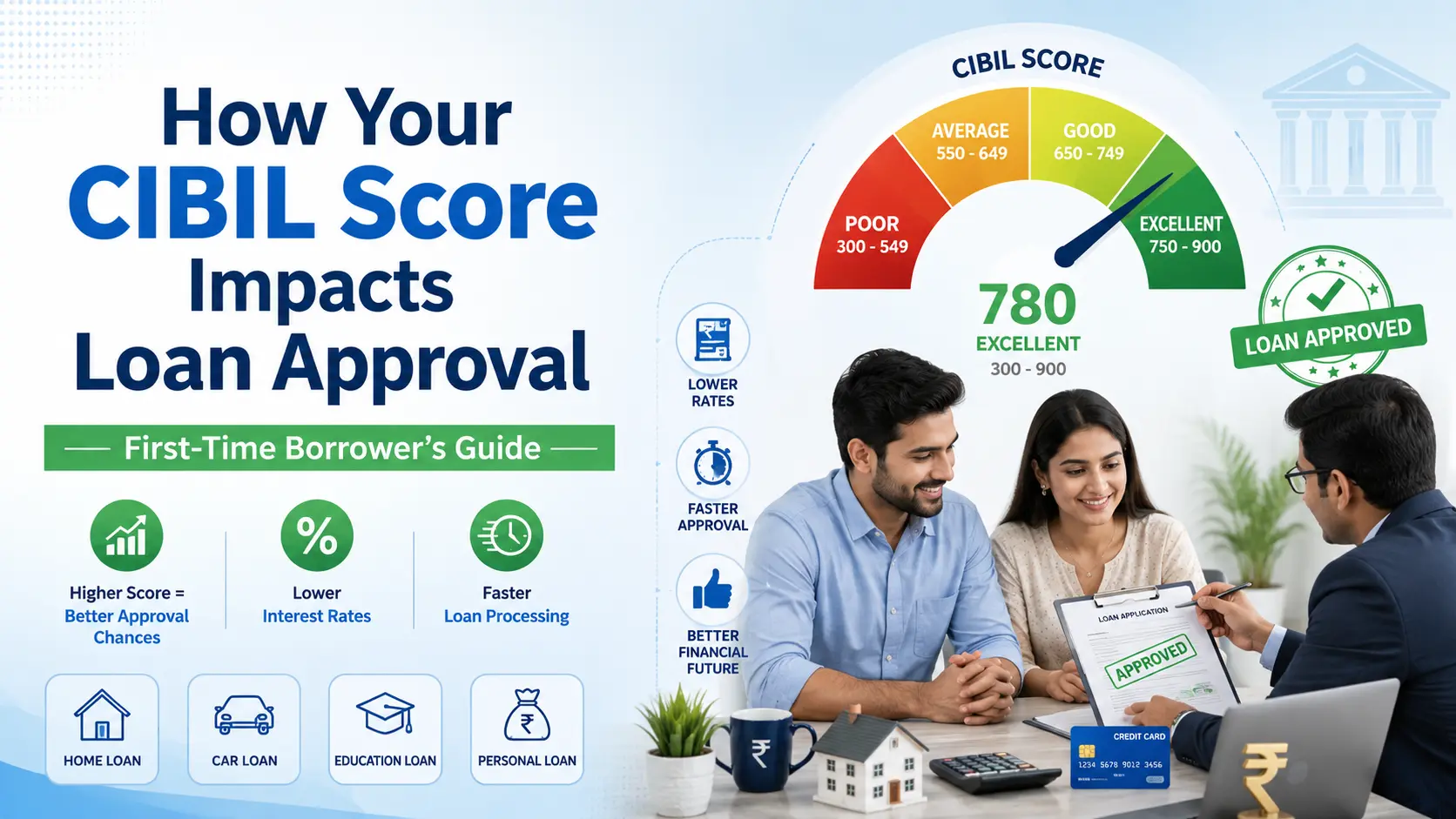
A score between 300-549 signals high risk. Banks interpret this as someone who struggles with financial discipline. Most traditional lenders won't approve loans in this range, regardless of your income.
Scores from 550-649 fall into the fair category. You might get approved, but expect higher interest rates and stricter terms. The bank sees you as manageable risk, but they'll charge extra for the privilege.
The sweet spot starts at 650-749. This range opens doors to most loan products with reasonable interest rates. Banks view you as a reliable borrower who occasionally stumbles but generally pays on time.
Anything above 750 puts you in the excellent category. You'll qualify for the best rates, higher loan amounts, and faster approval processes. Banks compete for borrowers in this range.
How Your Score Determines Interest Rates
Interest rates aren't random numbers banks assign. They're calculated based on risk assessment, and your CIBIL score is the primary risk indicator.
Consider a personal loan example. Someone with a 780 CIBIL score might get a 10.5% interest rate. The same loan for someone with a 620 score could carry 16% interest. On a ₹5 lakh loan over 5 years, that difference costs an extra ₹1.5 lakh in interest payments.
Home loans show even starker differences. A 50-point score difference can change your interest rate by 0.5-1%. Over a 20-year mortgage, this translates to lakhs in additional payments.
Banks use tiered pricing models. Each score range corresponds to specific interest rate brackets. There's no negotiating these rates based on charm or relationships. The score determines the rate, period.
The Hidden Ways CIBIL Scores Affect Loan Terms
Interest rates grab attention, but your CIBIL score influences loan terms in subtler ways that cost real money.
Loan-to-value ratios change based on your score. High scorers might get 90% financing on a home purchase. Lower scores might cap at 70-75%, forcing you to arrange larger down payments.
Processing fees vary too. Banks often waive fees for excellent credit scores but charge full rates for fair scores. On a ₹20 lakh home loan, this could mean ₹40,000 in additional upfront costs.
Repayment tenure options also shift. Excellent scores unlock longer repayment periods, reducing monthly EMIs. Poor scores might restrict you to shorter terms, increasing monthly payment pressure.
Some banks require additional documentation or guarantors for lower scores. This extends approval timelines and adds complexity to simple loan applications.
Building Your First CIBIL Score From Zero
First-time borrowers face the chicken-and-egg problem: no credit history means no score, but you need a score to get credit. Several strategies break this deadlock.
Secured credit cards offer the easiest entry point. You deposit ₹10,000-50,000 as collateral and receive a credit card with that limit. Use it for small purchases and pay the full balance monthly. This builds positive payment history within 3-6 months.
Becoming an authorized user on a family member's card can jumpstart your credit file. Their payment history gets reflected on your report, though this works only if they maintain excellent payment habits.
Small personal loans from NBFCs or fintech lenders provide another route. These companies often approve first-time borrowers at higher interest rates. Take a small loan, pay it back perfectly, and you'll establish a credit track record.
Utility bill payments now contribute to credit scores through alternative data. Consistently paying electricity, mobile, and broadband bills on time helps build credit history, though the impact is smaller than traditional credit products.
Common CIBIL Score Mistakes That Destroy Loan Chances
First-time borrowers often sabotage their scores through preventable mistakes. Late payments create the biggest damage. Even one payment that's 30 days late can drop your score by 50-100 points.
Credit utilization above 30% signals financial stress to lenders. If your credit card limit is ₹1 lakh, keeping balances above ₹30,000 hurts your score. Aim for under 10% utilization for optimal scores.
Applying for multiple loans simultaneously triggers hard inquiries that lower your score. Each inquiry can cost 5-10 points. Space out applications by at least 3-6 months unless you're rate shopping for the same loan type.
Closing old credit accounts shortens your credit history length. Keep your first credit card active with small purchases, even after getting better cards. Credit history length accounts for 15% of your score calculation.
What to Do If Your Score Isn't Loan-Ready
Not everyone starts with perfect credit. If your score needs work before applying for major loans, focus on targeted improvements.
Pay down existing credit card balances aggressively. This improves utilization ratios quickly. If you owe ₹80,000 across cards with ₹1 lakh total limits, paying down to ₹20,000 can boost your score within 30 days.
Set up automatic payments for all credit accounts. Late payments cause more score damage than any other factor. Automation prevents forgetful mistakes that cost points.
Check your CIBIL report for errors and dispute them immediately. Wrong information appears on 20-25% of credit reports. Correcting these errors can add 50-100 points instantly.
Consider a credit builder loan if traditional options aren't available. These specialized products help establish payment history for people with thin credit files.
Time works in your favor. Negative marks lose impact after 12-24 months, and fall off reports after 3-7 years depending on the type. Consistent good behavior eventually overwrites past mistakes.
Your CIBIL score isn't just a number on a report. It's your financial reputation translated into a format banks understand. Master the factors that influence it, and you'll unlock better loan terms, lower interest rates, and faster approvals throughout your financial life.
FAQ
What's the minimum CIBIL score needed for loan approval?
Most banks require a minimum score of 650 for personal loans and 700 for home loans. Some NBFCs approve loans with scores as low as 600, but expect higher interest rates and stricter terms.
How long does it take to build a CIBIL score from zero?
With consistent credit activity, you can establish a basic score within 3-6 months. Reaching a good score (above 700) typically takes 12-18 months of responsible credit behavior.
Can I get a loan without any CIBIL score?
Yes, but options are limited. Some NBFCs and fintech lenders offer loans to first-time borrowers based on income, employment history, and bank statements. Interest rates will be higher than traditional loans.